
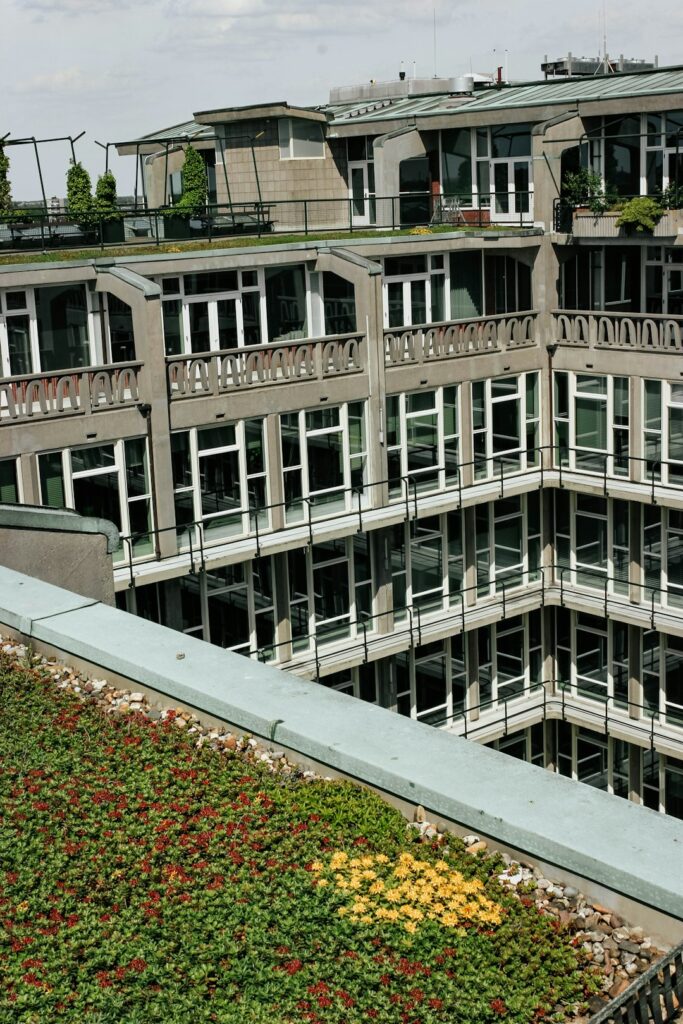
Green roofs can reduce rainwater runoff, moderate roof temperatures, and add planted space to a building. They can be worthwhile in Niagara Falls, NY, but they are not a universal replacement for conventional roofing. The decision depends on the building’s structure, roof slope, drainage design, maintenance capacity, and long-term plans.
What is a green roof?
A green roof is a roof assembly designed to support vegetation. It typically includes several layers:
- A waterproofing membrane
- A root-resistant barrier
- Drainage and water-storage components
- Lightweight growing medium
- Plants suited to the roof’s conditions
Some systems are installed across an entire roof. Others cover only a portion, such as a flat-roof addition, garage, porch, or detached structure.
Green roofs are generally divided into two categories. Extensive systems use a shallow growing medium and low-maintenance plants such as sedums, grasses, and hardy perennials. They are lighter and usually more practical for existing buildings. Intensive systems use deeper soil and can support larger plants, gardens, or small trees, but they require substantially more structural support, irrigation, and maintenance.
What benefits can a green roof provide?
The most measurable benefit is stormwater management. Plants and growing media absorb part of the rain and allow some water to evaporate gradually. This slows the amount of water reaching gutters, downspouts, yard surfaces, and storm drains during smaller storms.
That can be useful in a city where seasonal rain, snowmelt, and freeze-thaw cycles can place stress on drainage systems. A green roof will not eliminate runoff, particularly during prolonged rain or rapid snowmelt, but it can reduce and delay some of it.
Other potential benefits include:
- Less direct heat gain through the roof during warm weather
- Some added protection for the waterproofing membrane from sunlight and temperature swings
- Reduced roof-surface temperatures
- Habitat for insects and birds
- Improved views from nearby upper floors
- A planted area where ground-level space is limited
Energy savings are possible, but they are often overstated. A green roof can improve thermal performance, especially on a low-slope roof with limited insulation. However, insulation quality, air sealing, windows, heating equipment, and building use usually have a greater effect on household energy consumption.
Are green roofs practical in Niagara Falls?
They can be, but local winter conditions make design especially important. The area experiences cold weather, heavy snow in some seasons, strong winds, freezing and thawing, and periods of rain followed by rapid temperature changes.
A properly designed green roof must account for:
- Snow accumulation and drifting
- Saturated soil after extended rain
- Freeze-thaw movement
- Ice formation near drains and roof edges
- Winter wind exposure
- Spring snowmelt
- Access for inspections and repairs
Plants must also tolerate cold temperatures, wind, occasional drought, and shallow soil. A plant that performs well in a sheltered garden may fail on an exposed roof. Hardy, low-growing vegetation is usually more reliable than plants requiring deep soil or regular watering.
Snow itself is not automatically a problem. A green roof can be designed for snow loads, just as any other roof must be designed for local conditions. The concern is the combined weight of the roof system, saturated growing medium, stored water, people, equipment, and snow.
Can an existing home support a green roof?
Sometimes, but appearance alone cannot answer the question. A roof may look sturdy while the framing, walls, or foundation lack the capacity for the added load.
A lightweight extensive system may add less weight than an intensive garden roof, but it still adds a permanent load. The roof’s slope, framing spans, condition, age, and connection details all matter. Older homes and structures with past water damage deserve particular caution.
Structural review is necessary when a green roof is being considered for an existing building. This is one of the situations where qualified technical evaluation is not optional, because an overloaded roof can create serious safety risks.
Roof slope also matters. Low-slope roofs are generally easier to adapt because the growing medium can be retained with edging and drainage components. Steep roofs may need specialized restraints to prevent soil and plants from shifting downhill.
What are the main disadvantages?
The largest disadvantages are cost, weight, complexity, and maintenance.
A green roof is not simply a layer of soil placed over shingles. It requires a compatible waterproofing system, drainage paths, edge details, overflow protection, and access for inspection. If the waterproofing fails, finding and repairing the leak can be more complicated than with a conventional roof.
Maintenance may include:
- Removing unwanted woody growth
- Keeping drains, scuppers, and overflow routes clear
- Checking edging and flashing
- Replacing dead plants
- Inspecting areas around roof penetrations
- Monitoring erosion or exposed membrane
- Controlling irrigation, if the system uses it

Extensive roofs are often described as low-maintenance rather than maintenance-free. In a snowy climate, neglect can allow drainage problems or invasive growth to go unnoticed until they become expensive.
The roof may also be less accessible for ordinary repairs. Chimneys, vents, skylights, satellite equipment, and other penetrations need careful detailing. Future roof work can disturb the planted system and may require temporary removal of vegetation and growing medium.
Do green roofs last longer than conventional roofs?
They may help protect the waterproofing membrane from ultraviolet exposure and extreme temperature changes, but longevity depends on the full assembly and the quality of installation. A green roof does not compensate for poor drainage, defective flashing, inadequate structural design, or an aging membrane.
If a green roof is added to a roof that already needs replacement, the waterproofing layer should be treated as a major part of the project. Covering an old, questionable roof with soil and vegetation can make future problems harder to detect.
A green roof is most sensible when the underlying roof is new, structurally suitable, properly drained, and designed for long-term access.
Is a green roof worth the cost for a homeowner?
For many single-family homes, the answer is not automatically. The environmental benefits may be meaningful, but the financial payback can be slow. A conventional roof with strong insulation, careful air sealing, durable flashing, and well-designed drainage may provide better value for a typical sloped home.
A green roof becomes more reasonable when several conditions align:
- The building already has a low-slope roof
- The structure can support the additional weight
- Stormwater reduction is a high priority
- A planted roof would provide useful outdoor space or visual value
- The owner expects to keep the building for many years
- Routine maintenance is realistic
- The roof can be safely accessed for inspection
For a small residential structure, a partial green roof, planted roof section, or green-roof feature may offer some benefits without the full cost and weight of an intensive installation. Other stormwater measures, such as rain gardens, planting beds, downspout dispersion, or rainwater storage, may be simpler alternatives when roof structure or budget is limited.
What questions should be answered before choosing one?
Before moving forward, the decision should address the following:
- What is the roof’s current condition and remaining service life?
- How much additional saturated weight can the structure support?
- Where will excess water go during heavy rain and snowmelt?
- How will snow, ice, and wind affect the system?
- Can drains and roof edges be inspected safely?
- What plants can survive the exposure and winter conditions?
- How will leaks be located if they develop?
- Who will perform seasonal maintenance?
- Are permits or code reviews required for the proposed structural changes?
Green roofs can be a sound environmental choice, particularly on suitable low-slope buildings. In the local climate, however, success depends less on the appearance of the vegetation than on the hidden layers beneath it: structural support, waterproofing, drainage, edge protection, and access for maintenance.
