
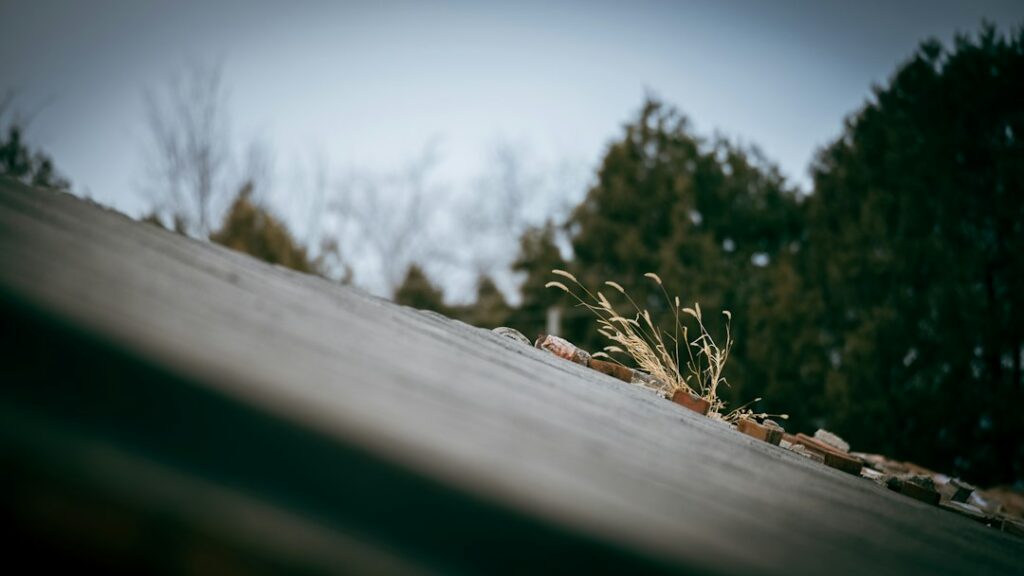
What counts as roof debris?
Roof debris includes leaves, twigs, branches, pine needles, animal nesting material, windblown litter, and loose roofing pieces. After a storm, debris may also include broken shingles, metal fragments, tree limbs, and sediment carried by runoff.
In Niagara Falls, NY, debris can collect quickly because seasonal wind, lake-effect weather, heavy rain, and snow can move organic material onto roof surfaces. Homes near mature trees may need more frequent inspection, especially during autumn and after strong winds.
Debris is not only a cosmetic concern. Wet leaves can hold moisture against shingles, clog drainage paths, stain roofing materials, and contribute to decay around roof edges. Branches can scratch protective surfaces or puncture shingles. Heavy accumulations may also add unnecessary weight.
Is it safe to remove debris from the roof yourself?
Roof debris should only be removed from the roof when the surface is low-slope, dry, stable, and safely accessible. Steep roofs, wet shingles, icy surfaces, fragile roofing, and storm-damaged areas create serious fall and structural hazards.
A safer approach is to remove light debris from the ground or from a securely positioned ladder without climbing onto the roof. A roof rake, soft-bristled extension brush, or long-handled leaf tool can often reach loose leaves and small twigs from the edge.
Do not climb onto a roof when:
- Shingles are wet, frosted, icy, or covered with snow.
- The roof is steep, unusually high, or difficult to access.
- A storm has left broken branches, exposed decking, sagging areas, or loose electrical wires.
- The roof surface is brittle, moss-covered, heavily worn, or visibly damaged.
- There is no stable way to maintain three points of contact.
- Wind conditions could affect balance or move tools and debris.
A fall can cause severe injury even from a relatively low roof. If debris is tangled with utility wires, trapped near damaged roofing, or too heavy to remove safely, the hazard should not be treated as a routine cleaning task.
What tools are appropriate for removing leaves and small debris?
The right tools remove material without scraping, gouging, or loosening the roof covering. For most light debris, use a roof rake, soft-bristled brush, leaf blower designed for controlled use, work gloves, eye protection, and a stable ladder when necessary.
A few principles help prevent damage:
- Pull tools downward toward the roof edge rather than dragging them across shingles.
- Use soft bristles instead of stiff metal or abrasive heads.
- Keep tools from catching under shingle tabs.
- Do not use a pressure washer on asphalt shingles, wood roofing, or delicate flashing.
- Avoid metal shovels, garden rakes, and sharp-edged tools.
- Do not blow debris toward people, windows, vehicles, gardens, or neighboring property.
- Secure loose clothing and tools so they cannot fall or become airborne.
A leaf blower may work for dry leaves on a low-slope roof, but it can also force debris beneath flashing or lift granules from asphalt shingles if used too aggressively. Blowing should be controlled and directed toward the roof edge, never under shingles or toward roof penetrations.
How should branches and heavier debris be removed?
Small twigs can usually be lifted by hand while wearing gloves, but larger branches should not be dragged across the roof. Dragging can tear shingles, bend flashing, damage gutters, or spread hidden damage over a larger area.
If a branch is resting on the roof, first determine whether it is under tension. A limb caught between roof features or supported by another branch can shift unexpectedly when moved. Do not cut a suspended or tensioned limb from a roof.
After a major storm, look for:
- Cracked, punctured, or missing shingles
- Exposed underlayment or roof decking
- Bent drip edges, flashing, vents, or gutters
- Broken tree limbs resting on the roof
- New ceiling stains or damp attic insulation
- Sagging roof sections
- Granules or shingle pieces in gutters or on the ground

Debris removal should not hide or disturb evidence of roof damage before the condition is documented. If water is entering the home, place a container under the leak when practical and protect interior belongings, but avoid climbing onto a damaged roof.
How can debris be removed from gutters without damaging the roof?
Gutters should be cleared from a stable ladder rather than by walking along the roof edge. Remove loose material by hand with gloves or use a small scoop that will not puncture the gutter. Place debris in a bucket attached to the ladder or lower it carefully instead of throwing it.
Check that downspouts are open by flushing them with a moderate flow of water from a hose. If water backs up, a blockage may exist in the downspout or underground outlet. Do not use excessive water pressure, which can separate joints or force water behind fascia boards.
Gutter cleaning is especially relevant after autumn leaf fall and spring thaw. Ice dams and freeze-thaw cycles can also move debris into drainage channels. During winter, do not chip ice aggressively from gutters or shingles. Sharp tools can damage both the drainage system and the roof covering.
What should be done with moss, algae, and stuck-on material?
Loose leaves and twigs can be removed, but moss and firmly attached growth require more caution. Scraping or power washing can remove protective granules, break shingle seals, and shorten the life of the roof.
Moss often grows where the roof stays damp and shaded. Its roots can lift or separate roofing materials over time. Removing visible growth without correcting persistent shade, trapped moisture, or blocked drainage may allow it to return.
Do not use household bleach, strong solvents, or unapproved cleaning mixtures without understanding their effects on roofing, siding, plants, and metal components. Runoff from cleaning can harm landscaping and may enter storm drains. Any treatment should follow the roofing material manufacturer’s instructions.
How often should a roof be checked for debris?
A practical schedule is to inspect the roof visually from the ground several times each year and after significant wind, rain, or snow events. Areas beneath large trees may require additional checks during leaf drop and after branches shed.
For many households, useful inspection points include:
- Early spring, after snow and ice have receded
- After major summer or autumn wind
- During and after fall leaf drop
- Before winter weather arrives
- After heavy snow if roof edges, vents, or gutters appear blocked
Use binoculars from the ground to examine roof edges, valleys, vents, skylights, and areas beneath trees. Looking from several angles can reveal lifted shingles or debris that is not visible from the driveway.
Can roof debris cause leaks?
Yes. Debris can contribute to leaks by trapping water, blocking valleys and gutters, damaging shingles, or covering a small defect that grows unnoticed. However, debris is not always the original cause of a leak. Water may enter at flashing, vents, valleys, chimney areas, or damaged underlayment and then appear indoors some distance away.
A ceiling stain that appears after debris removal still deserves attention. Do not assume the problem is solved simply because the roof surface looks clear. Check the attic, if it can be reached safely, for damp insulation, water marks, mold-like growth, or daylight through the roof deck.
The safest debris-removal routine is simple: inspect from the ground, wait for dry and calm conditions, use gentle tools, protect gutters, avoid damaged or icy surfaces, and treat heavy or hazardous material as a safety problem rather than an ordinary cleaning job.
